Your resume is almost never deleted by software. Only one thing rejects an application automatically: the yes/no knockout questions on the form. Everything else that stops a human from reading your resume is quieter. The file parsed badly, so the recruiter's search never found you. Or your application was ranked low in a pile of four hundred, and the recruiter stopped scrolling at fifty. Here is what actually happens between "Submit" and a human's eyes, and what you can change.
First, the number you have probably read: "75% of resumes are rejected by ATS"
That figure appears on thousands of pages. It traces back to a marketing claim made in 2012 by a resume-optimisation vendor called Preptel, which shut down the following year without ever publishing a study, a sample or a method. Career writers have documented the citation chain since; the number drifts between 70, 75 and 88 percent depending on who copied whom. Recruiter surveys point the other way. In a 2025 set of structured interviews with 25 US recruiters using Workday, iCIMS, Lever, Greenhouse and other systems, 23 said their software does not reject resumes at all; rejection is a manual action. Recruiters who write about the hiring side estimate that the large majority of applications are looked at by a person, even if only for seconds.
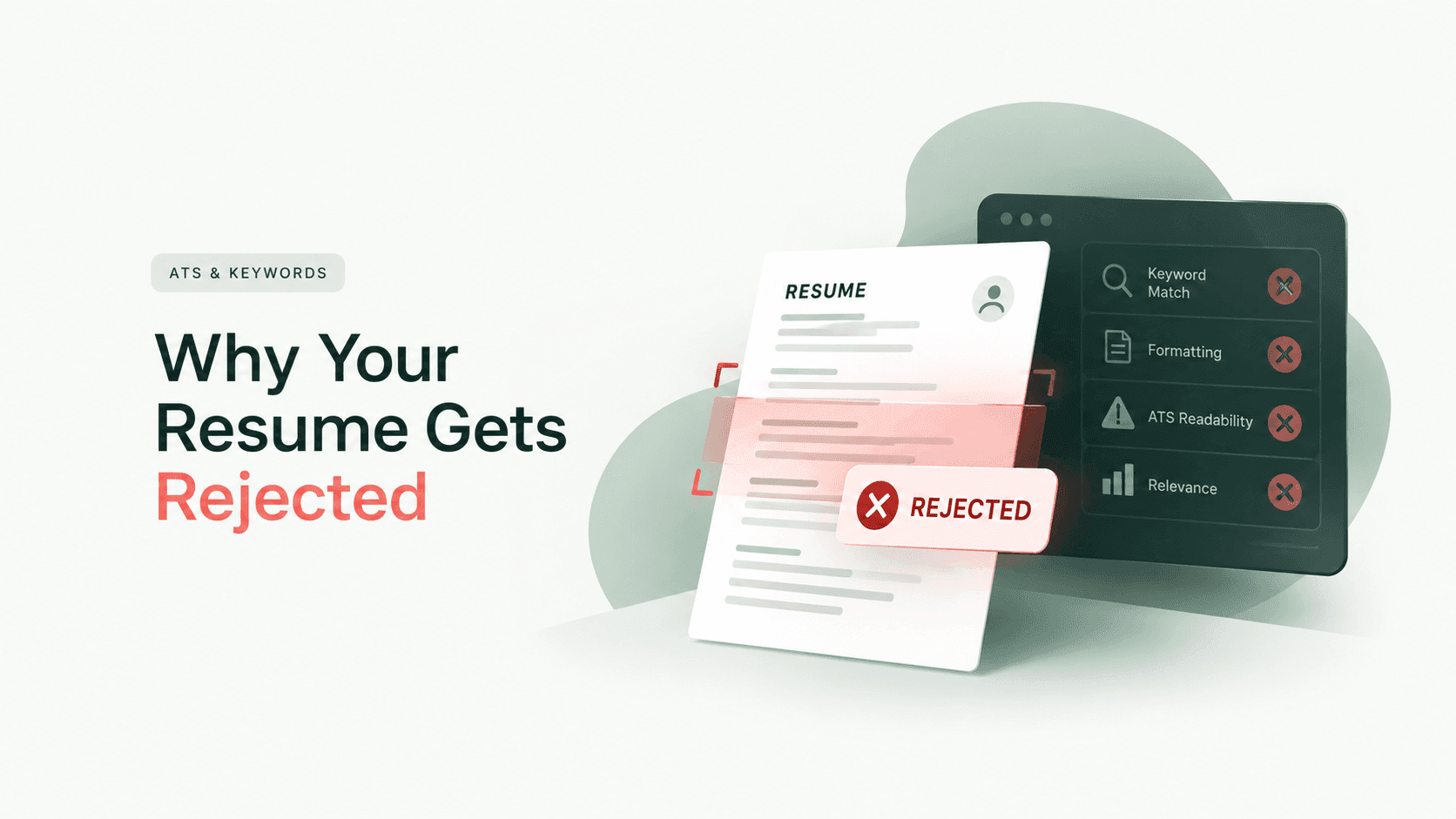
So the question is not "how do I beat the robot". It is "why did the person never get to me". There are three honest answers.
Reason 1: you failed a knockout question
When an employer sets up a posting, they can add screening questions to the application form: Are you authorised to work in this country? Do you hold the required licence? Are you willing to work on site? Do you have at least three years of experience with X? These are configured per job, and an answer that misses a required one closes the application before anyone looks at the resume. Every recruiter in the survey above used them. This is the one genuinely automatic rejection in modern hiring, and it has nothing to do with your formatting.
What to do: read the questions as the filter they are. Answer honestly, but answer the question being asked. "Do you have experience with Salesforce?" is asking whether you can do the job, not whether Salesforce appears in your last job title. If you fail a hard requirement such as work authorisation or a licence, no resume change fixes that posting; spend the time on one you qualify for.
Reason 2: your resume parsed badly, so searches never found you
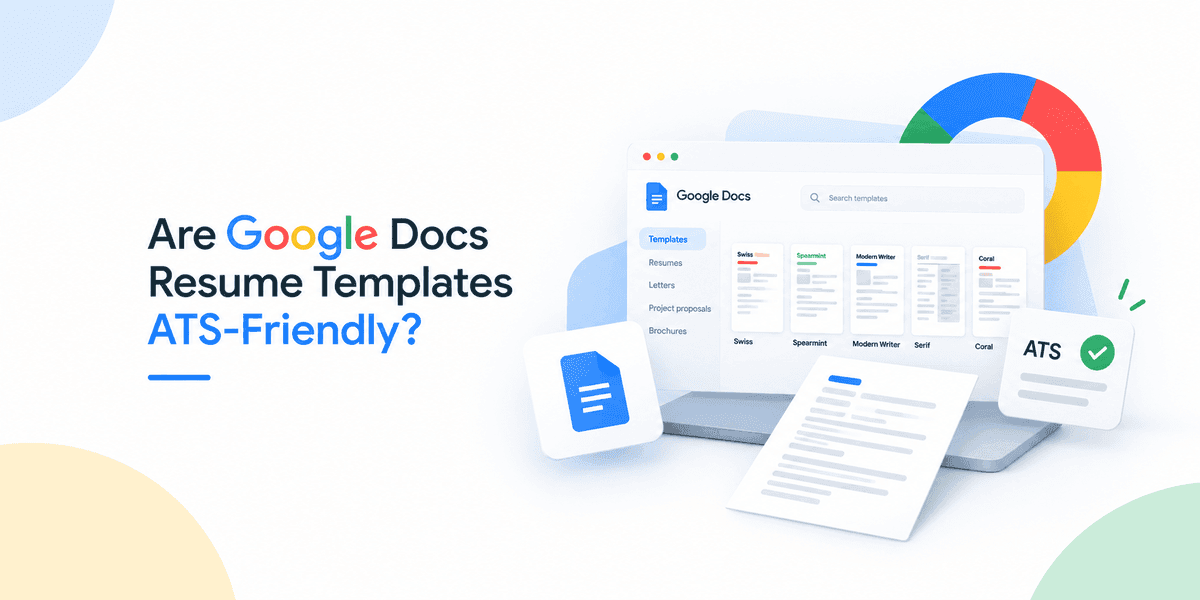
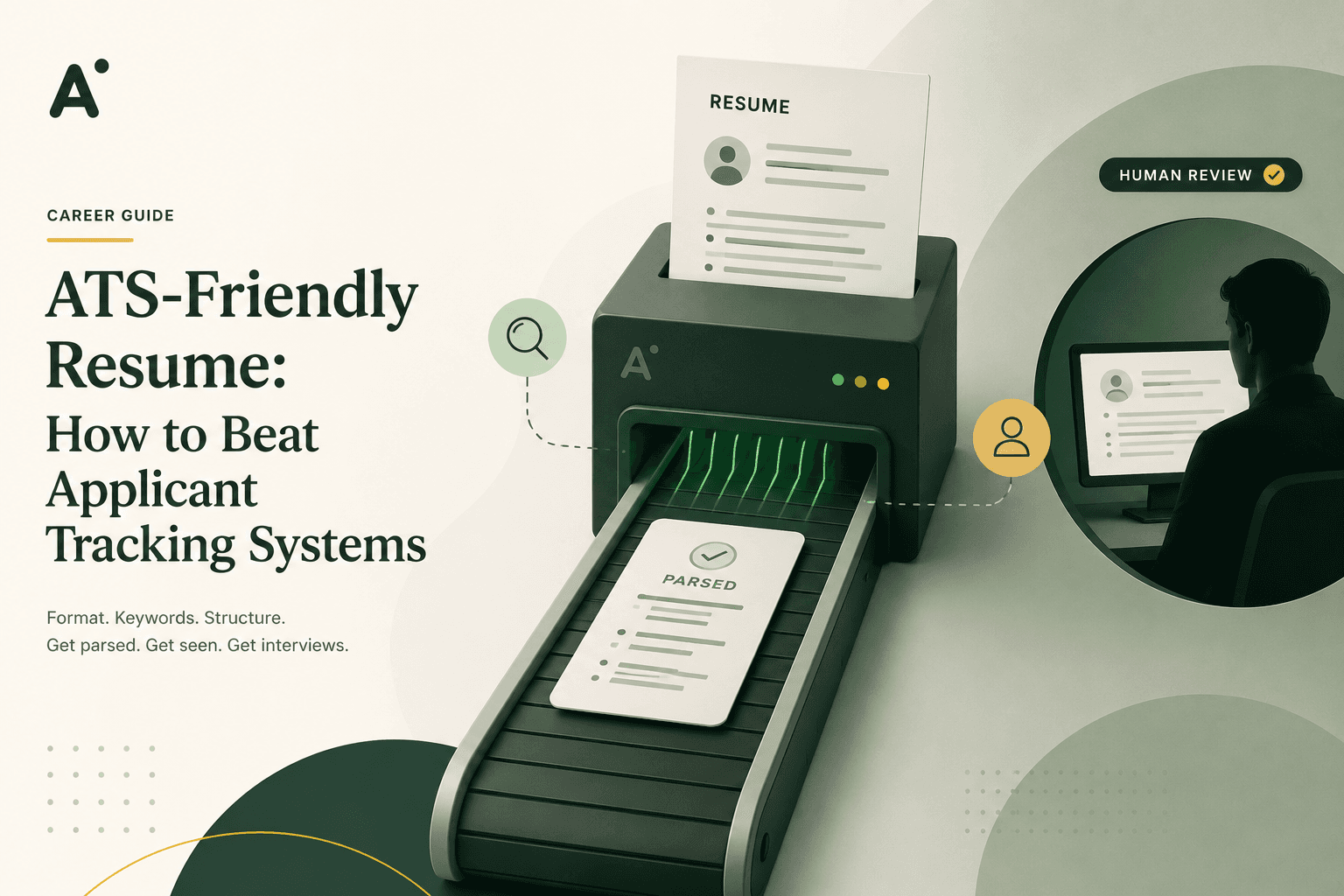
An applicant tracking system stores your resume as a record with fields: name, contact details, job titles, employers, dates, skills, education. It fills those fields by extracting text from your file. Recruiters then search and filter those fields ("Python", "registered nurse", "within 50 miles") rather than opening every PDF. A parsing failure does not delete you. It leaves you with an empty or garbled record that no search returns and that looks broken if someone does open it.
The layouts that break extraction are consistent across systems, and worst on the older, OCR-based parsers still common in large-company Workday, iCIMS and Taleo installations:
Contact details in the page header or footer. Several parsers skip those regions entirely. Your email vanishes from the record. Put contact details in the body of the page.
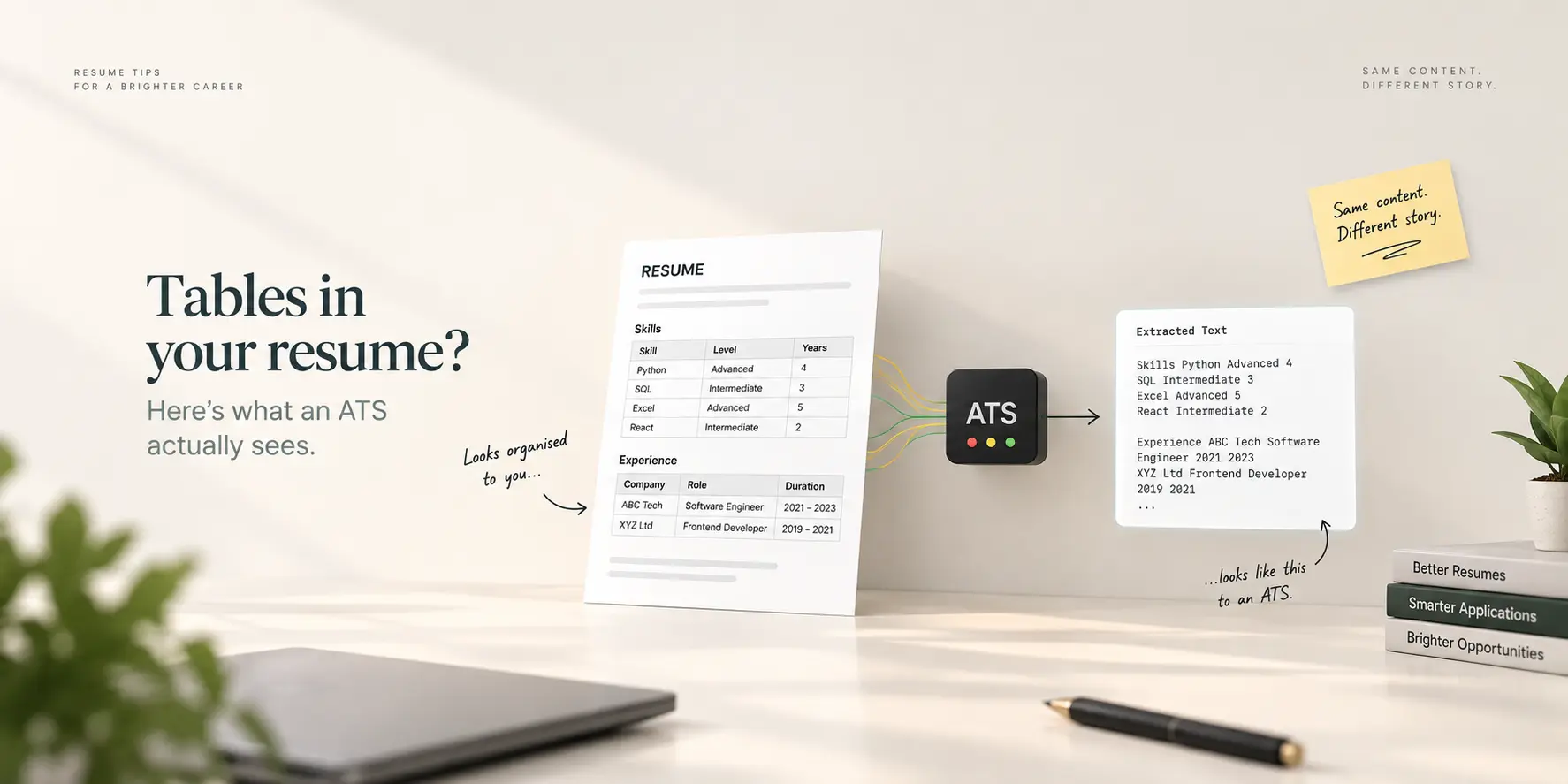
Two columns and tables. Parsers read left to right across the page, so a job title in the left column merges with a skill from the right. Modern systems handle simple columns better than the myths suggest, but you do not get to choose the employer's system, so a single column is the only layout that is safe everywhere.
Icons, skill bars and text inside images. Nothing is extracted from a picture. A rating bar for "Excel" contributes no text at all.
Unusual fonts and symbols. Decorative fonts can extract as garbage characters. Standard fonts extract cleanly.
The wrong file. A text-based PDF or a .docx parses reliably. A scanned PDF, a .pages file or an image export of your design often extracts nothing.
What to do: check what a parser sees before you apply. The free ATS resume test extracts the text from your PDF exactly the way a parser does and shows you the result page by page, so a scrambled column or a missing email is visible in seconds. Our guide to ATS-friendly resume formatting covers the fixes.
Reason 3: you parsed fine and were buried anyway
This is the most common outcome and the least discussed. A posting at a mid-sized company can draw hundreds of applications in its first week. The recruiter sorts by whatever the system offers: match to the job description, keyword hits, date applied, an AI ranking. Then they work down from the top and stop when they have a shortlist. Nobody rejected the resume at position 180. Nobody reached it.
Ranking is mostly keyword and title based, and it is literal. If the posting says "customer success manager" and your title says "client happiness lead", you may not surface on a title search even though it is the same job. If the requirements list "SQL", "Tableau" and "stakeholder management" and your resume says "databases", "dashboards" and "worked with partners", a keyword sort puts you below candidates who used the posting's words.
What to do: mirror the posting's language wherever it is true. Use the exact skill names, the standard version of your job title alongside the internal one ("Client Happiness Lead (Customer Success Manager)"), and the certifications spelled the way the posting spells them. Paste the posting and your resume into the free ATS resume checker to see which of its terms you are missing; our post on resume keywords explains how to work them in without stuffing. Apply early when you can. Recruiters read in the order applications arrive more often than they admit.
Reason 4, the one that is actually you: the human read it and passed
If your file parses, you cleared the knockouts and you used the right words, and you still hear nothing, the recruiter probably did look, for about the time it takes to read this sentence. What loses that glance is not formatting. It is a summary that could describe anyone, bullets that list duties without results, a career story that does not obviously fit the role, or a resume that was clearly sent to forty jobs unchanged. Fixing that is a writing job, not a formatting job. Start with the achievements: what changed because you were there, with a number where one exists.
How to tell which reason applied to you
Rejected within minutes, often at odd hours: a knockout question. Re-read the form.
Application portal shows garbled fields (your name in the employer box, a blank email): parsing. Many portals show you the parsed profile before you submit; fix it there and fix the file.
Silence for weeks, then a generic rejection when the role closes: you were buried or passed over at the glance. Tighten keywords and rewrite the top third of the page.
Interviews from small companies but nothing from large ones: a layout that modern parsers handle and legacy ones do not. Go single column.
Frequently asked questions
Do applicant tracking systems automatically reject resumes?
Almost never on the resume itself. Automatic rejection comes from knockout questions on the application form. A small minority of employers configure hard score cutoffs, but for most, ranking and filtering decide who gets read, and a person decides who gets rejected.
Is there a real "ATS score" I should aim for?
No single one. Each system and each employer's configuration ranks differently, so a tool's score is a proxy for keyword overlap, not a pass mark. Use it to find missing terms, not to chase a number.
PDF or Word for an ATS?
Either, as long as the PDF contains real text rather than an image. If the posting specifies a format, use that one.
Does applying early really help?
Often, yes. Many recruiters review in order of arrival and build a shortlist before the posting closes. Applying in the first few days puts you in the part of the list that gets read.
Should I tailor my resume for every job?
Tailor the parts that ranking and searching touch: title line, summary, skills list and the wording of your most relevant bullets. That is twenty minutes, not a rewrite, and it is the difference between position 30 and position 200.
See what the parser sees
Before your next application, run the PDF through the free ATS resume test and the posting through the free ATS checker. Both are free, need no account, and take under a minute. If the extraction is clean and the required terms are covered, the rest is down to what the resume says, which is the part you can actually control.