Some recruiters read cover letters, most skim them, and a few never open them at all. The honest answer to "do recruiters read cover letters" is that it depends on three things you can partly predict: who is doing the screening, how many applications arrived, and whether your letter answers a question your resume (CV) leaves open. When a hiring manager is choosing between two close candidates, the letter is often the thing that gets read carefully. When an agency recruiter is clearing four hundred applications, it is not. Write for the first situation and keep it short enough to survive the second.
Who reads and who does not
Agency and high-volume in-house recruiters screen resumes first and fastest. Most will not open a letter unless the resume already passed. Some will never open it.
Hiring managers, the people you would report to, read letters more often, especially at smaller companies and for roles where writing or judgement matters. They are also the ones who decide, so the letter reaches the reader who counts even if it skipped the first one.
Small companies and founders read almost everything, because they receive less and care about fit.
Applicant tracking systems store the letter as a document. Many parse it for keywords too, so its content can affect where you rank even if no person opens it.
Surveys of recruiters produce contradictory numbers every year, because they ask different populations different questions. Treat any single statistic about "how many recruiters read cover letters" with suspicion. The pattern behind the surveys is stable: letters matter less at the top of the funnel and more at the decision.
Is there evidence that letters change outcomes?
Some. The most cited piece is a 2020 field experiment by ResumeGo, which sent thousands of applications to real job postings with no letter, a generic letter or a tailored one, and found that applications with a tailored cover letter received noticeably more interview invitations than those without, while generic letters helped far less. One experiment is not a law, but the direction matches what hiring managers say when you ask them directly: a specific letter helps, a template letter is noise, and no letter is neutral at worst.
When a cover letter is worth writing
The posting asks for one. Skipping it is a knockout for some employers, and the ones who ask tend to read.
Your resume raises a question. A career change, a relocation, a gap, an overqualified or underqualified profile. The letter is where you answer it in two sentences before the reader invents a worse explanation.
The company is small or the role is senior. The reader is likely the decision maker.
You have a specific reason to want this job. A product you use, a mission you have worked in before, a person who referred you. Specific reasons are what generic letters cannot fake.
Writing is part of the job. The letter is a work sample whether you intend it or not.
When to skip it, or keep it to five lines
The application form marks it optional and the company is large and high volume. A short note is still fine; a page is wasted effort.
You would only be restating the resume. A letter that summarises the resume adds a second document that says the same thing.
You are applying through a recruiter who has already briefed the client. Send them a short note instead; they will paraphrase you.
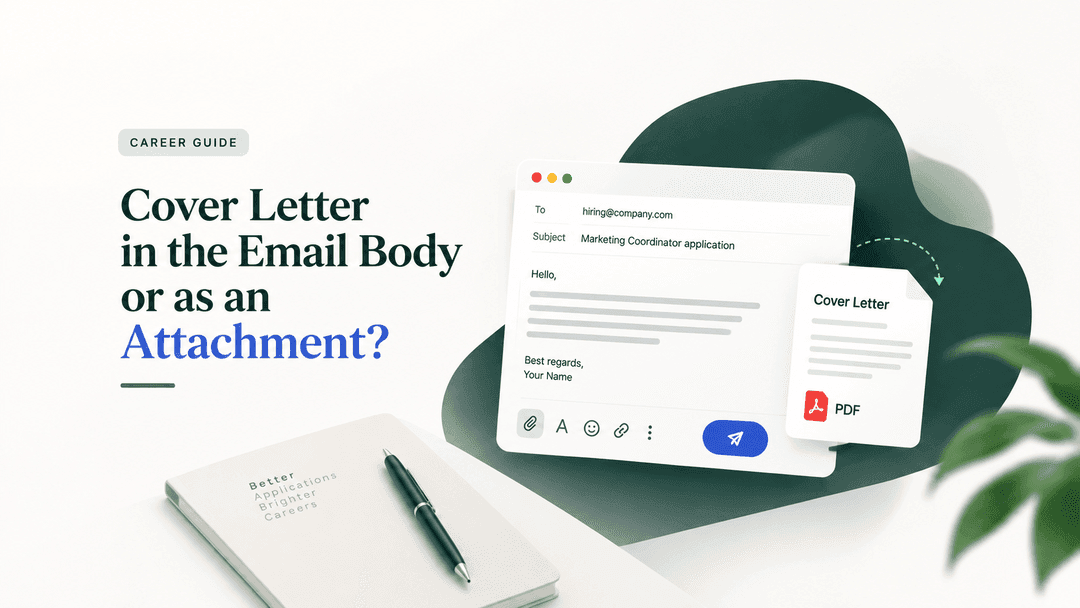
Whether you paste the letter into the email body or attach it is a separate question, answered in cover letter in the email body or as an attachment.
How to write one that survives a 20-second read
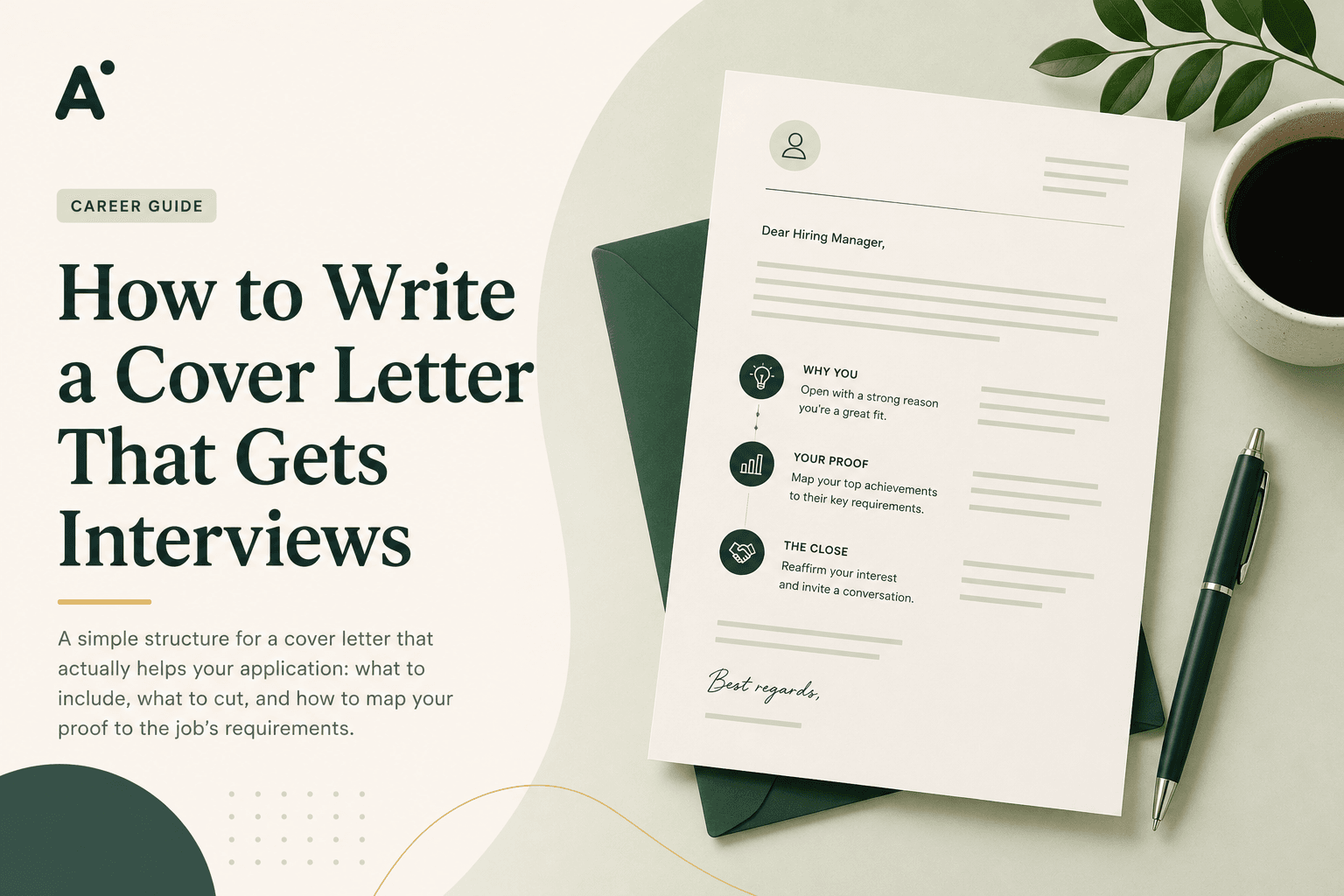
Assume the reader is skimming and design for it. Three short paragraphs, under 300 words, with the point of each paragraph in its first sentence.
Why this job, specifically. One sentence that could not be sent to another company. Name the team, the product, the problem or the person.
Proof you can do it. Two or three requirements from the posting, each matched to one concrete thing you did, with a number where one exists. This is the paragraph a hiring manager reads twice.
The open question, if any, and the ask. Address the gap or the change in one calm sentence, then ask for the conversation.
Cut every sentence that begins with "I am writing to apply" or "I am a passionate, results-driven professional". They are the sentences skimmers use to decide the rest is template. Our full guide to how to write a cover letter walks through each paragraph with examples.
A letter the resume cannot replace
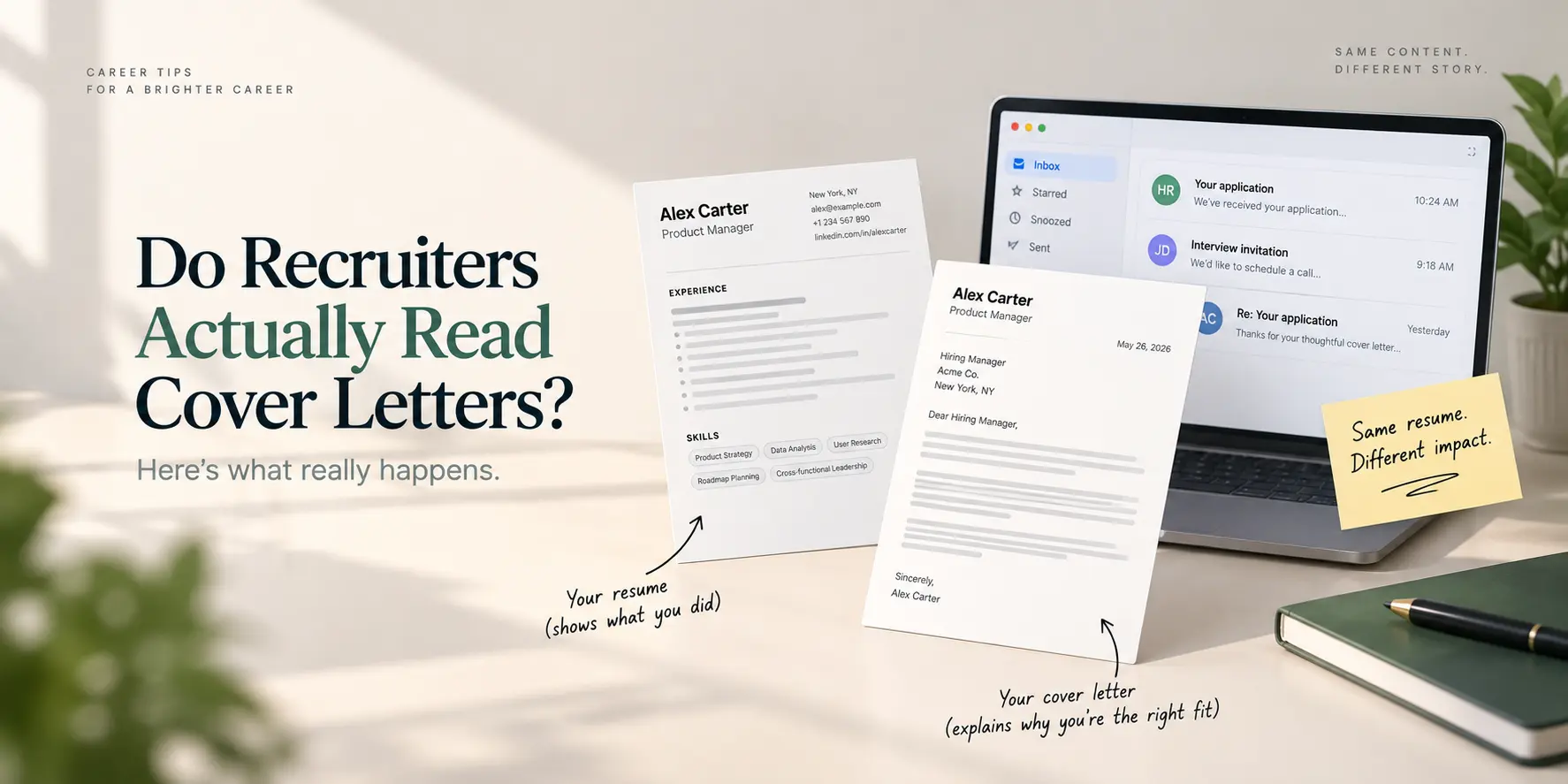
The resume proves what you did. The letter is the only place you get to say why it matters for this job and this team, and to handle anything the resume makes the reader wonder about. That is why the people who decide read letters more than the people who screen do. Write for the deciders.
Frequently asked questions
Do recruiters read cover letters in 2026?
Fewer than they used to at the screening stage, about the same at the decision stage. Hiring managers and small companies still read them; high-volume recruiters mostly do not.
Is it better to send no cover letter than a bad one?
Yes. A generic letter signals low effort to the one reader who does open it. If you cannot make it specific, send a short, courteous note instead of a page of template.
Does the ATS read the cover letter?
Many systems parse it and index its text for searches, so the letter can add keywords your resume lacks. Do not stuff it, but do use the posting's real terms where they are true of you.
How long should a cover letter be if nobody reads them?
Three paragraphs, 200 to 300 words. Long enough to give proof, short enough that a skimmer gets the point from the first sentences.
Should I write a cover letter for an internal application?
Yes, and it can be shorter. The reader knows your work; use the letter to say why this move and what you would do in the first months.
Write the specific letter in minutes
ApplyLift's cover letter generator reads your CV and the job posting, maps each requirement to real proof from your experience, and drafts the three paragraphs above on your CV's own letterhead. You edit the wording, keep what is true, and send a letter that was written for one job. New accounts include free AI credits to try it.